Charge and Go: Indian Scientists Are Making 15-Minute EV Charging a Real Thing
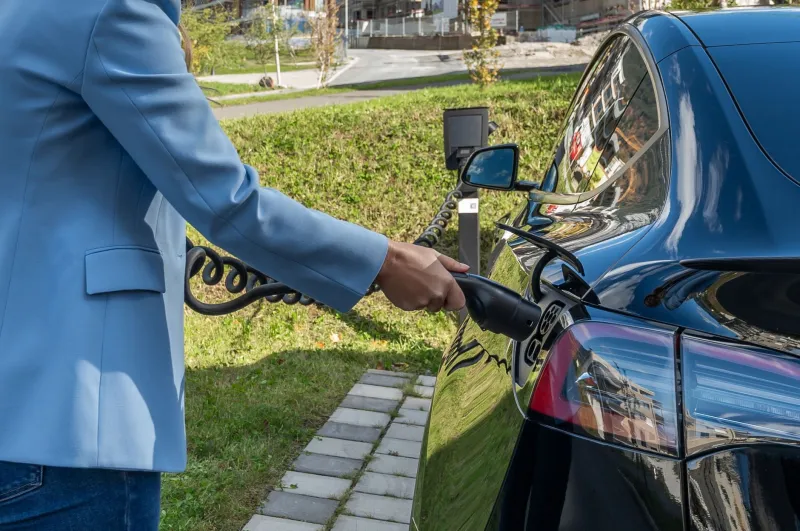
Pull into a charging station with a near-dead battery, plug in, grab a coffee, and drive away fully charged. Fifteen minutes. That's the dream automakers have been dangling in front of EV buyers for the better part of a decade. Tesla keeps nudging its Supercharger speeds upward. GM is promising next-gen Ultium packs. But while the big players trade press releases, a cluster of researchers and startups operating out of Bangalore, Pune, and Chennai are quietly doing something that looks a lot more like actual progress.
And almost nobody in the US is talking about it.
What's Actually Holding Fast Charging Back
Before getting into what Indian labs are doing differently, it helps to understand why fast charging is so hard in the first place. The short version: lithium-ion batteries hate being rushed. Pump too much current in too quickly and you get lithium plating — a process where lithium metal deposits on the anode instead of inserting cleanly into it. Over time, that causes capacity loss. In worst-case scenarios, it causes fires.
The liquid electrolytes in conventional batteries make this problem worse. They're thermally unstable under high-current conditions, which is why your phone gets warm when you're fast-charging it and why EV thermal management systems are so elaborate and expensive.
Solid-state batteries swap out that liquid electrolyte for a solid ceramic or polymer material. The promise has been around for years — Toyota has been hyping solid-state since at least 2017 — but getting them to work at scale, at reasonable cost, without cracking under repeated charge cycles has proven brutally difficult.
Where India Enters the Picture
The Indian Institute of Science (IISc) in Bangalore has been running a battery research program that doesn't get nearly the attention it deserves outside of academic circles. A team there has been developing a sulfide-based solid electrolyte that addresses one of the core mechanical problems: the tendency for solid electrolytes to fracture as the battery expands and contracts during charge cycles.
"The interface stability issue is what has killed most solid-state timelines," explained one researcher affiliated with the program, speaking to TechLeez on background. "We've been working on a composite architecture that distributes mechanical stress differently. Early cycle-life data is genuinely encouraging."
Meanwhile, a Pune-based startup called Scalar Energy (not yet widely covered in Western tech media) has been piloting a hybrid approach — pairing a solid electrolyte layer with a modified anode structure using silicon-carbon composites. The goal isn't just faster charging in isolation; it's faster charging that doesn't degrade the battery after 500 or 1,000 cycles. Their internal testing, shared in part with TechLeez, suggests charge times under 18 minutes for an 80% fill on a prototype cell with energy density competitive with current premium lithium-ion packs.
That's not production-ready. But it's closer than most Western outlets realize.
The Thermal Management Angle
Another piece of this puzzle is thermal management, and this is where some genuinely creative engineering is happening. A Chennai-based firm working in the EV components space has developed a phase-change material cooling system designed specifically for high-rate charging scenarios. Instead of active liquid cooling — which adds weight, complexity, and cost — their system uses materials that absorb heat by changing from solid to liquid at precisely calibrated temperatures.
The practical upside is that the battery pack stays within safe thermal ranges even during aggressive charging without needing a bulky active cooling loop. For two-wheeler and three-wheeler EVs — a massive market in India — this kind of weight and cost reduction is critical. But the technology scales, and there's no reason a version of it couldn't find its way into passenger cars.
Why This Matters for American EV Buyers
Here's the uncomfortable truth about the US EV market right now: range anxiety is real, but charging anxiety might be worse. Studies consistently show that the time commitment of charging — not just the availability of chargers — is one of the top barriers to EV adoption among American consumers who are on the fence.
If a credible 15-minute fast charge becomes available at scale, that psychological barrier largely evaporates. You're not longer making a lifestyle compromise; you're just stopping for gas, essentially.
The irony is that the technology most likely to solve this problem for American drivers may arrive via supply chains and licensing deals rooted in Indian R&D rather than through the domestic programs that get the headlines and the federal funding.
India's EV ecosystem has a structural advantage that's easy to overlook: pressure. The country needs EVs that are affordable, durable in extreme heat, and chargeable quickly because the grid and consumer economics demand it. That constraint-driven environment tends to produce leaner, more practical engineering than labs working with essentially unlimited runway.
What the Timeline Looks Like
Nobody credible is promising 15-minute solid-state charging in a consumer EV by 2025. The honest answer from researchers in this space is that 2027-2029 is a realistic window for early commercial applications, likely starting in two-wheelers and commercial fleet vehicles before scaling to passenger cars.
But component-level technology — the electrolyte chemistries, the thermal materials, the anode architectures — could start showing up in licensing agreements and joint ventures much sooner. Indian startups are actively courting partnerships with Korean, Japanese, and increasingly American battery manufacturers.
Keep an eye on the battery technology announcements coming out of the next few years. Some of the most interesting IP in that space has a Bangalore zip code.
The Bottom Line
The EV charging problem isn't going to be solved by a single dramatic announcement from a Silicon Valley stage. It's going to be solved incrementally, by materials scientists and thermal engineers grinding through problems in labs that don't always make the tech press. A meaningful chunk of that grinding is happening in India right now, and the output is starting to look like something real.
American EV buyers waiting for fast charging to stop being a compromise might not have to wait as long as they think — and they might have Indian researchers to thank for it.