Qubits and Chai: Inside India's Scrappy Quantum Computing Revolution
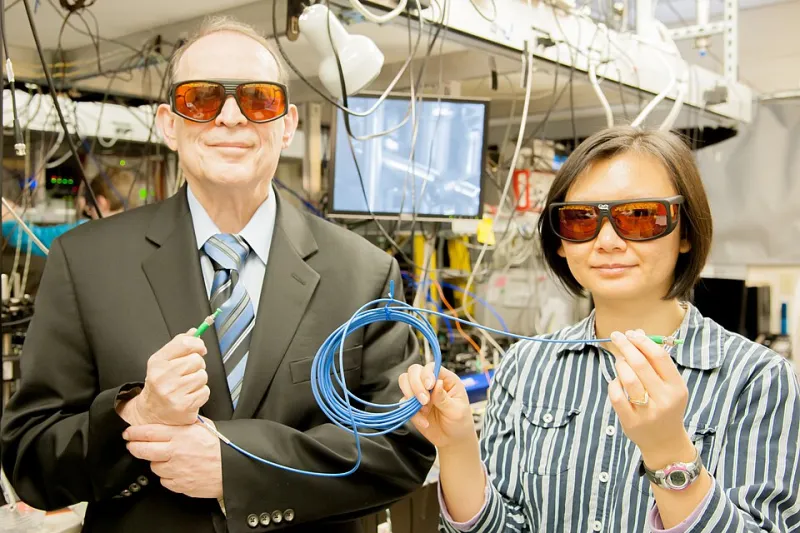
Photo: U.S. Army CCDC, CC BY 2.0, via Wikimedia Commons
There's a lab in Bengaluru where a team of twenty-something engineers is doing something that would make even IBM's quantum division take notice. They're not working with billion-dollar budgets or sprawling research campuses. They've got strong coffee, a tight-knit crew, and a genuinely novel approach to quantum error correction that has caught the eye of investors from Boston to Berlin.
This is India's quantum moment — and it's arriving faster than most people expected.
A Scene That Didn't Exist Five Years Ago
As recently as 2019, India's quantum computing scene was essentially a rounding error on the global stage. A handful of academic papers, a few IIT research groups, and not much else. Fast forward to today, and the picture looks dramatically different. Startups are spinning out of premier institutions, government funding through the National Quantum Mission (a $730 million commitment announced in 2023) is flowing, and international VCs are writing checks.
The question isn't whether India is playing in the quantum space anymore. It's whether it's about to set the pace.
The Startups You Should Know
QNu Labs, based in Bengaluru, has carved out a niche in quantum key distribution — essentially, making data transmission unhackable using the principles of quantum mechanics. They've already deployed commercial solutions for Indian financial institutions and are actively exploring partnerships in the US market, where post-quantum cryptography is suddenly a very urgent conversation.
Qulabs India is tackling the thornier problem of quantum error correction, arguably the biggest bottleneck preventing practical quantum computers from living up to their theoretical promise. Their hybrid classical-quantum approach — which blends conventional computing architectures with quantum processing units — is drawing comparisons to approaches being explored at Google and IonQ, but at a fraction of the development cost.
BosonQ Psi is taking a more applied route, building quantum-powered simulation software aimed at aerospace and manufacturing industries. Think of them as the quantum-native answer to ANSYS or Siemens' simulation tools. They've already partnered with several European aerospace firms and are actively pitching to American defense contractors.
Quantum Circuits India (QCI), a newer entrant out of Pune, is focused on superconducting qubit hardware — the same underlying technology that powers IBM's and Google's flagship quantum systems. What makes QCI interesting is their emphasis on modular, scalable qubit arrays designed specifically for data center integration, a commercial angle that most hardware-focused startups have been slow to pursue.
Rounding out the scene is Entropica Labs' India operations and homegrown player Qkrishi, which is applying quantum algorithms to financial modeling and portfolio optimization — a use case with enormous appetite among Wall Street firms who are already experimenting with quantum-adjacent tools.
Why India, and Why Now?
The talent story is the obvious starting point. India produces roughly 1.5 million engineering graduates every year, and a meaningful slice of them are deeply versed in physics, mathematics, and computational theory — the exact skill set quantum computing demands. Many of the engineers now building India's quantum startups did stints at places like MIT, Caltech, or CERN before returning home, bringing hard-won expertise with them.
But talent alone doesn't explain the momentum. Operating costs matter enormously in deep tech, where the R&D runway before commercialization can stretch for years. A quantum research team in Bengaluru costs a fraction of an equivalent team in the Bay Area or Boston. That cost advantage doesn't make the physics any easier, but it does mean Indian startups can afford to experiment longer, iterate faster, and stay alive through the inevitable dead ends.
"We can run experiments that a US-based startup at our funding stage simply couldn't afford," one founder told us, asking not to be named ahead of a funding announcement. "That's not a small thing in a field where you need thousands of experimental runs to make meaningful progress."
International Money Is Paying Attention
The funding picture has shifted noticeably. While Indian quantum startups were largely self-funded or reliant on government grants just a few years ago, 2023 and 2024 have seen a wave of international capital entering the ecosystem. European deep-tech funds, US-based quantum-focused investors, and even strategic investments from global technology companies have all started showing up in Indian quantum funding rounds.
The National Quantum Mission has also acted as a confidence signal for private investors — government commitment at that scale tells the market that India is serious, and it de-risks early-stage bets in a field where the commercial timeline is notoriously hard to predict.
The Challenges Are Real
None of this means the path is smooth. India's quantum ecosystem still lacks the dense network of specialized suppliers, fabrication facilities, and academic-industry pipelines that give places like the Research Triangle in North Carolina or the Boston-Cambridge corridor their competitive edge. Building a superconducting qubit in India still means importing critical components, often from suppliers in the US, Japan, or Germany.
There's also the brain drain question. India's best quantum researchers remain attractive targets for recruitment by Google, IBM, and Microsoft, all of whom offer compensation packages that Indian startups can't easily match. Retaining talent as the ecosystem matures is going to require a combination of equity structures, research freedom, and frankly, a compelling national narrative about building something historic at home.
The Bigger Picture
Here's the thing about quantum computing: nobody has fully figured it out yet. The US has a head start in terms of hardware maturity and research infrastructure, but quantum supremacy — in any commercially meaningful sense — hasn't been achieved by anyone. That levels the playing field in ways that simply don't exist in, say, semiconductor manufacturing, where the US and Taiwan have decades of compounding advantages.
India is entering the quantum race at a moment when the race is genuinely still open. The startups coming out of Bengaluru and Pune aren't playing catch-up. They're running a parallel track — and in some specific problem domains, like quantum cryptography and hybrid simulation, they're already competitive on a global stage.
Silicon Valley built its dominance over decades, largely because it had a head start and the infrastructure to sustain it. Quantum computing doesn't have a Valley yet. India's quantum founders seem to understand that better than most.