India Has Been Fighting AI Deepfakes Longer Than America Has — Here's What It's Learned
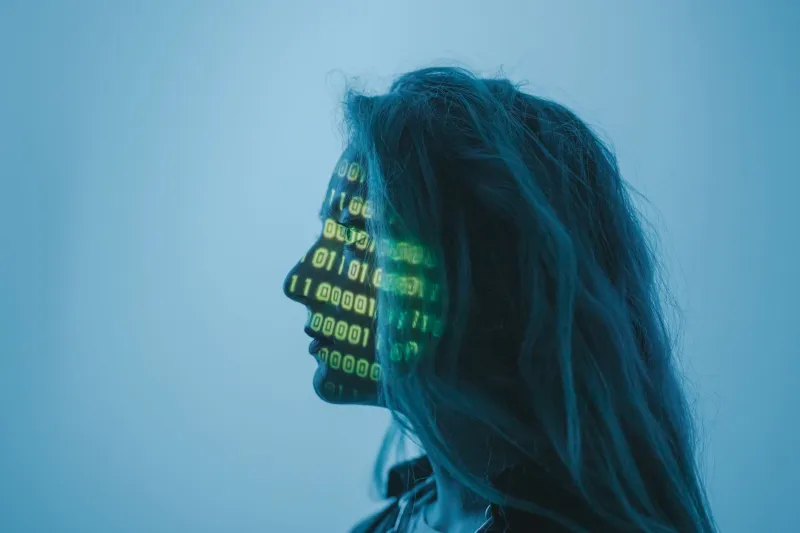
Let's be direct about something: the United States is behind on deepfakes. Not in creating them — American AI labs are world-class at that. Behind on dealing with them. On building the detection infrastructure, the policy muscle, the public awareness, and the platform accountability that turns synthetic media from an existential threat to a manageable one.
India, for all the chaos that sometimes surrounds its information ecosystem, has been doing this work longer and under more pressure. And the lessons coming out of that experience are ones American platforms, regulators, and voters probably can't afford to ignore much longer.
The Scale of the Problem India Had to Face First
Start with the numbers. India runs the world's largest democratic elections. The 2024 general election involved roughly 970 million eligible voters spread across dozens of languages, thousands of local media ecosystems, and a mobile internet penetration that has exploded over the past decade. That's an almost incomprehensibly large attack surface for synthetic media.
And it was exploited. Ahead of state elections in 2023 and during the 2024 general election cycle, researchers and journalists documented hundreds of instances of AI-generated video and audio being circulated on WhatsApp, YouTube, and local social platforms. Some depicted politicians saying things they never said. Others fabricated endorsements, manufactured scandals, or simply muddied the information environment enough to make voters uncertain about what was real.
This wasn't theoretical. It happened at scale, in real time, affecting real electoral outcomes in ways that are still being analyzed.
The Startups That Had to Build Fast
Out of that pressure came a generation of Indian AI companies focused specifically on synthetic media detection — and they built fast because they had to.
Bangalore-based Truly Media (a collaboration with local and international partners) has been developing context-verification tools designed to work across low-bandwidth environments — critical for a country where a huge percentage of misinformation travels over WhatsApp on mid-range Android devices with spotty connections. Their approach doesn't rely purely on pixel-level deepfake detection, which can be fooled by compression artifacts anyway. Instead, it layers in metadata analysis, source credibility signals, and cross-reference checks against verified content databases.
Another player worth knowing: Staqu Technologies, which has built AI-based video analysis tools originally designed for law enforcement that have found a second life in synthetic media verification. Their facial behavior analysis can flag inconsistencies in AI-generated video that are invisible to the human eye — micro-expressions that don't track correctly, blink patterns that fall outside natural ranges, lighting inconsistencies that betray a composited face.
There are smaller players, too — a growing cluster of startups coming out of IIT Madras, IIT Bombay, and newer tech hubs in Hyderabad — working on audio deepfake detection, document forgery identification, and real-time flagging systems designed to plug directly into platform APIs.
The Policy Experiment Nobody Covered
Here's where it gets genuinely interesting from a governance perspective. India's approach to synthetic media regulation isn't tidy — it's messy, contested, and still evolving. But the country has actually tried things that the US is still debating.
The Indian government issued advisories in early 2024 requiring social media platforms operating in India to label AI-generated content and to establish faster takedown pipelines for verified synthetic media. Enforcement has been inconsistent, and civil liberties groups have raised legitimate concerns about how those powers could be misused. But the framework exists, has been tested against real-world conditions, and has generated actual data about what works and what doesn't.
The US, by contrast, is still largely in the committee-hearing phase. The DEFIANCE Act and similar legislation have moved slowly. Platform self-regulation remains the primary line of defense — a system that has not exactly distinguished itself in the misinformation era.
What America's Platforms Are Getting Wrong
There's a core assumption embedded in how US platforms approach deepfake detection that Indian practitioners have largely moved past: the idea that detection is primarily a technical problem.
It's not. Or rather, it's not only that. The technical detection piece is necessary but nowhere near sufficient. What matters as much — maybe more — is the social and behavioral infrastructure around the detection. Who gets flagged content? How quickly? What happens to their trust in the platform if the flag turns out to be wrong? How do you handle synthetic media that's technically detectable but has already been seen by 10 million people?
Indian researchers and platform teams have been grappling with these questions in live environments. The answers they've arrived at are nuanced and context-dependent in ways that don't translate neatly into a single algorithmic fix.
"Detection accuracy alone is a vanity metric," one researcher affiliated with a Hyderabad-based AI ethics organization told TechLeez. "What matters is whether the intervention changes behavior at the point of sharing. That's a human problem as much as a machine problem."
The Language Problem (And Why It's Relevant to the US)
One more thing American technologists tend to underestimate: the multilingual challenge. India's synthetic media problem doesn't just span regions — it spans 22 officially recognized languages and hundreds of dialects, each with different content ecosystems, different trust networks, and different cultural contexts for what makes a piece of content believable.
US platforms are increasingly facing a version of this problem. Synthetic media disinformation targeting Spanish-speaking communities, Vietnamese-American voters, or Haitian Creole speakers operates in information ecosystems that English-first moderation systems handle poorly. India has been building detection and intervention tools designed for exactly this kind of fragmented, multilingual environment.
That expertise is transferable. The question is whether anyone in a position to act on it is paying enough attention.
The Takeaway
India isn't a perfect model. Its information environment has serious problems that detection tools alone won't fix, and some of its regulatory moves raise legitimate concerns about government overreach. None of this is simple.
But the country has accumulated something genuinely valuable: real-world experience fighting AI-generated disinformation at massive scale, under electoral pressure, across a fragmented media landscape. That experience lives in the engineering teams of Bangalore startups, in the policy papers coming out of Indian academic institutions, and in the hard-won intuitions of researchers who've been in the trenches.
America's platforms and policymakers can keep treating this as a problem they'll figure out from first principles. Or they can look at what's already been learned. The clock is running either way.