Forget the Apple Watch: These Indian Biotech Wearables Are Tracking Things Apple Can't
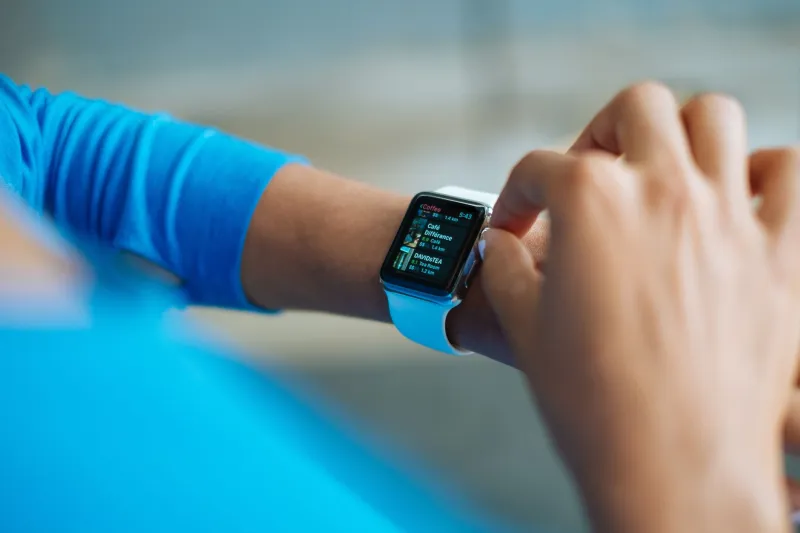
Apple's health team deserves credit. The Apple Watch has done more to normalize health tracking as a consumer behavior than almost any other product in the past decade. ECG on your wrist was a big deal. Blood oxygen monitoring was a step forward. Fall detection has genuinely saved lives.
But here's the thing: the Apple Watch is a consumer electronics product trying to do medicine. And there's a generation of wearables being built in Indian biotech labs that started from the opposite direction — medical-grade sensing technology being made accessible enough for everyday wear. The gap between those two approaches is bigger than most American consumers realize, and the products coming out of Bangalore, Mumbai, and Hyderabad are starting to make that gap visible.
The Non-Invasive Glucose Monitor That Actually Works
If you've followed health tech for any length of time, you've seen the non-invasive glucose monitor promised approximately one thousand times. No finger pricks, no continuous glucose monitor (CGM) patch, just a wearable that reads your blood sugar through your skin. It's been the white whale of health technology for years, and for good reason — the science is genuinely hard.
Agnivo, a Bangalore-based biotech startup founded by researchers with backgrounds in photonics and clinical biochemistry, is making a serious run at it. Their approach uses a combination of near-infrared spectroscopy and Raman spectroscopy — essentially bouncing specific wavelengths of light through the skin and analyzing what comes back — combined with a machine learning model trained on a dataset of tens of thousands of clinical readings across diverse skin tones and metabolic profiles.
That last part matters more than it might seem. One of the persistent problems with optical glucose sensing is that it performs inconsistently across different skin tones — a failure mode that has derailed previous attempts and raised real equity concerns in medical device development. Agnivo has been explicit about building skin-tone diversity into their training data from the start, which isn't just good ethics; it's good engineering.
I spent about a week with an early hardware prototype (under NDA, so no photos, and I'll note clearly that this is a pre-production unit, not a finished product). The form factor is a chunky wrist band — not Apple Watch sleek — but the team is clear that industrial design is coming after they nail the sensing accuracy. Correlation with finger-prick readings was impressive in the low-to-moderate glucose range; the device struggled a bit at the high end of the range, which the team acknowledged. Clinical validation trials are ongoing, with a regulatory submission to India's CDSCO targeted for late 2025 and FDA engagement expected to follow.
For the 38 million Americans living with diabetes and the many more managing pre-diabetes, a reliable non-invasive glucose monitor would be genuinely life-changing. Agnivo isn't there yet, but they're closer than anything currently on the US market.
Cardiac Sensing Beyond the ECG
The Apple Watch ECG feature captures a single-lead electrocardiogram — useful for detecting atrial fibrillation, but limited in what it can tell you about overall cardiac health. A Hyderabad-based startup called Cardia.ai is working on a multi-parameter cardiac wearable that goes considerably further.
Their device — worn as a chest patch rather than a wrist band, which is a meaningful distinction for signal quality — captures a six-lead ECG alongside seismocardiography (vibrations from the heart's mechanical activity), photoplethysmography (the same optical pulse-sensing tech in most smartwatches), and skin temperature. That multi-modal data feeds into an AI model that can flag not just arrhythmias but early indicators of reduced cardiac output, stress-related cardiac changes, and patterns associated with elevated risk of cardiac events.
The clinical partnership angle here is interesting: Cardia.ai has been running validation studies with several Indian hospital networks, which gives them access to labeled clinical data that most consumer wearable companies don't have. That data advantage shows in the specificity of their AI outputs — rather than a generic "consult your doctor" flag, the system generates structured reports that cardiologists have described as genuinely useful for triage.
US availability is probably 2026-2027 at the earliest, given the FDA's Class II medical device pathway they'll need to navigate. But the company has already begun preliminary conversations with US cardiology networks.
The Metabolic Wearable You Haven't Heard Of
Beyond glucose and cardiac metrics, there's a broader category of metabolic health monitoring that the current wearable market barely touches. A Mumbai startup called NutriSense India (distinct from the US company of the same name) has built a wearable patch system that tracks interstitial fluid biomarkers — not just glucose but also lactate levels, which are a key indicator of metabolic efficiency during exercise and a marker of cellular stress.
Athletes have been getting lactate testing done in sports science labs for decades. Doing it continuously and non-invasively via a wearable patch is a different proposition entirely. NutriSense India's approach uses enzymatic biosensors embedded in a flexible patch that adheres to the upper arm — similar in form to a CGM patch but with a broader biomarker panel.
The fitness and performance optimization market in the US is enormous, and lactate monitoring sits at the intersection of endurance sports, metabolic health, and the growing interest in longevity optimization. This is a product with a clear American consumer market if the company can get the regulatory pathway and distribution sorted.
Why Indian Biotech Is Moving Faster Than You'd Expect
There's a pattern here worth naming. Indian biotech wearable startups are operating in an environment that demands cost efficiency, forces creative approaches to clinical validation (partnering with hospital networks rather than running standalone trials), and has a regulatory agency in CDSCO that, while rigorous, has faster timelines than the FDA for certain device categories. That combination creates a development culture that's scrappy in the best sense — willing to iterate quickly and forced to solve real problems rather than incremental ones.
The talent pipeline is also real. Indian engineering and medical schools are producing graduates who combine clinical domain knowledge with machine learning expertise in a way that's genuinely rare. The IITs and AIIMS are feeding people into these startups who understand both the biology and the signal processing, and that combination is hard to replicate.
When Can Americans Actually Buy These?
Honest answer: it varies, and it depends heavily on FDA timelines that are notoriously hard to predict. For the cardiac monitoring devices, 2026-2027 is a reasonable estimate for early US market entry, likely through clinical or healthcare professional channels before direct-to-consumer. For non-invasive glucose monitoring, 2027-2028 is probably optimistic but not impossible if clinical validation goes well. Metabolic patch devices could move faster if they're positioned as wellness products rather than medical devices, which affects the regulatory pathway.
What's clear is that the innovation is real, the timelines are shortening, and American consumers who've been waiting for wearables that do more than count steps and flash move reminders should be watching what's coming out of India's biotech corridor very closely.
The next thing on your wrist might not come from Cupertino.