Leaving the Valley Behind: Why India's Best Tech Minds Are Coming Home — and What It Means for the US
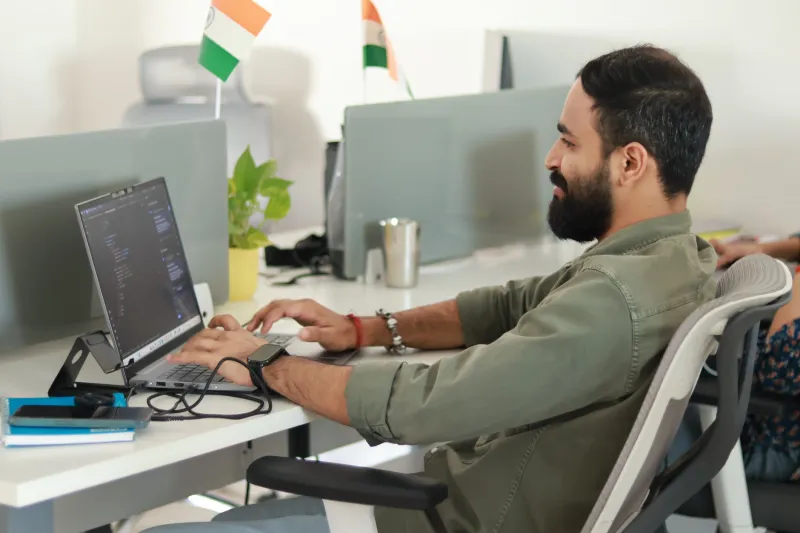
Somewhere around 2021, something shifted. The signals were subtle at first — a senior engineer at a major cloud provider quietly putting in their notice, a well-regarded product manager at a fintech unicorn telling colleagues they were "heading back." By 2023, it had become a pattern recognizable enough to have a name in Indian tech circles: the Great Return.
This isn't about people getting pushed out. It's about people making an active choice — often a financially sophisticated, strategically deliberate choice — to build something in India rather than grind through another visa renewal cycle in California.
The People Making the Move
Take Rohan Verma. He spent eight years in the Bay Area, first at a Series B security startup, then at a household-name tech company where he led a team of 40 engineers. He returned to Bengaluru in early 2023 and co-founded a B2B SaaS company targeting mid-market US and Indian enterprises. His seed round closed at $3.2 million — more than he could have raised for a comparable idea five years ago.
"The calculus changed completely," Verma says. "When I started in the Valley, the funding infrastructure in India wasn't there. You couldn't raise a serious seed round without a US entity and a US address. That's just not true anymore."
Or consider Deepa Iyer, a former ML engineer at a major American social platform who returned to Mumbai to launch an AI-native HR analytics company. She closed a pre-seed round from two Indian VCs within six weeks of incorporation. "I think what surprised me most was how fast things moved," she says. "I expected India to feel slower. It doesn't anymore."
These aren't isolated stories. They're representative of a cohort that's reshaping India's startup landscape from the top down — people with deep technical skills, US enterprise market experience, and genuine founder ambition who are choosing Bengaluru and Hyderabad over Palo Alto.
What the Data Shows
The numbers back up the anecdotes. India's startup ecosystem absorbed over $8 billion in venture funding in 2023 despite a global VC pullback — a relative resilience that reflects both growing domestic LP interest and international investors increasingly comfortable writing checks for India-headquartered companies.
More relevant to this story: the composition of founding teams at Indian startups is changing. A 2023 analysis by Tracxn and Nasscom found that the proportion of Indian startups with at least one founder who had prior work experience at a US tech company had increased by roughly 34% compared to 2018. The returnee founder is no longer the exception — in certain sectors like enterprise SaaS, AI infrastructure, and fintech, they're practically the template.
On the immigration side, the context matters enormously. The H-1B backlog for Indian nationals has reached absurd proportions — in some employment categories, wait times for green cards stretch to 80 years or more under current quotas. For Indian engineers in their 30s and 40s who've built careers in the US, the math on permanent residency has simply stopped working. Returning home isn't giving up. For many, it's the rational move.
The Valley's Invisible Export Problem
Here's the part that doesn't get discussed enough in American tech circles: when an experienced Indian engineer or product leader leaves a US company to found something in India, they're taking institutional knowledge with them. They understand how American enterprise buyers make decisions. They know what a good go-to-market motion looks like for a US mid-market customer. They've been inside the rooms where product roadmaps get built.
That knowledge, applied in an environment with dramatically lower operating costs and a massive domestic market to use as a proving ground, is a powerful competitive combination. Several Indian SaaS companies founded by returnees are already generating meaningful ARR from US customers — competing directly with Valley-based companies on functionality while undercutting them significantly on price.
"The Valley trained us really well," says one Hyderabad-based founder who asked to remain anonymous. "And now we're competing with them. I don't think they've fully processed that yet."
India's Pull Factors Are Real Now
It would be too simple to frame this entirely as a push story — visa frustrations, housing costs, the general grinding anxiety of Bay Area life. The pull factors are genuinely compelling on their own terms.
India's digital infrastructure has undergone a transformation that's easy to underestimate from the outside. UPI, the government-built payments rail, processes over 10 billion transactions a month and has created a fintech innovation layer that rivals anything in the US. The Aadhaar digital identity system, whatever its controversies, has enabled a level of financial inclusion that's created entirely new addressable markets. Cloud infrastructure from AWS, Azure, and GCP is fully available and widely deployed. Talent density in cities like Bengaluru and Hyderabad is genuinely world-class.
"When I left India in 2013, you couldn't build a scalable B2B SaaS company here because the payment infrastructure didn't exist and enterprise procurement processes were a nightmare," says Preethi Mohan, who returned from Seattle in 2022 to co-found a supply chain visibility platform. "Neither of those things is true anymore. The market is ready."
What This Means Going Forward
For India, the implications are straightforwardly positive. Returnee founders bring capital networks, technical credibility, and market knowledge that accelerate ecosystem maturation. They mentor younger founders, attract international co-investors, and build companies that create high-quality employment.
For the United States, the picture is more complicated. The American tech industry has long benefited from a global talent pipeline that flows in one direction — toward California. That pipeline is developing a meaningful reverse current. The engineers and product leaders who return to India don't disappear from the global tech economy. They become competitors, often well-capitalized and market-savvy ones.
None of this happens in a vacuum. Immigration policy, cost of living, and the relative dynamism of opportunity on each side of the equation will continue to shape the flow. But the era when the Valley could count on Indian talent arriving, staying, and building American companies almost by default? That era is ending.
The talent is still world-class. It's just increasingly building for itself.