America's Big Tech Has a Climate Hangover — and India Is Selling the Cure
Let's start with an uncomfortable truth about Silicon Valley's green ambitions: for all the net-zero pledges and sustainability reports, American tech companies are consuming more energy than ever. Data center electricity demand in the US is projected to nearly double by 2030, driven largely by AI workloads. Meanwhile, the cooling systems keeping those servers alive still rely heavily on technology that hasn't fundamentally changed in decades.
Enter India — not as a charity case or a cheap labor market, but as a genuine engineering powerhouse quietly solving the problems that Western R&D budgets haven't cracked. The deals are happening. They're just not happening loudly.
The Data Center Cooling Crisis Nobody's Talking About Loudly Enough
Data centers are essentially buildings full of computers running so hot that keeping them from melting is a full-time industrial challenge. Traditional air cooling is increasingly inadequate for the compute densities that AI training requires — we're talking about GPU clusters that generate heat loads comparable to small industrial furnaces.
Liquid cooling is widely accepted as the path forward, but the implementation has been brutally expensive and complex for most operators. That's where a cluster of Indian engineering startups has found an opening.
Bengaluru-based Capelon Technologies, for instance, has developed a direct liquid cooling architecture that uses a novel dielectric fluid formulation developed in partnership with IISc (the Indian Institute of Science). The system reportedly achieves a Power Usage Effectiveness (PUE) — the standard efficiency metric for data centers — of below 1.1, compared to the industry average of around 1.5. A hyperscaler running at that efficiency difference across a large campus is looking at tens of millions of dollars in annual energy savings.
"The physics of heat transfer is the same everywhere, but the engineering culture in India pushes you toward material constraints early," says Vikram Nair, co-founder of a Pune-based thermal management startup that recently signed a pilot agreement with a major US cloud provider. He declined to name the partner due to NDA restrictions — a common theme in this space. "When you can't throw money at a problem, you find more elegant solutions."
Solar Hardware: The Quiet Acquisition Wave
Beyond cooling, Indian startups are making moves in renewable energy hardware that are starting to attract serious American attention — including acquisition interest.
India's solar manufacturing sector has been supercharged by the government's Production Linked Incentive (PLI) scheme, which has driven investment in high-efficiency photovoltaic cell manufacturing that rivals anything coming out of China or South Korea. But it's not just the manufacturing capacity that's interesting — it's the engineering innovations embedded in the products.
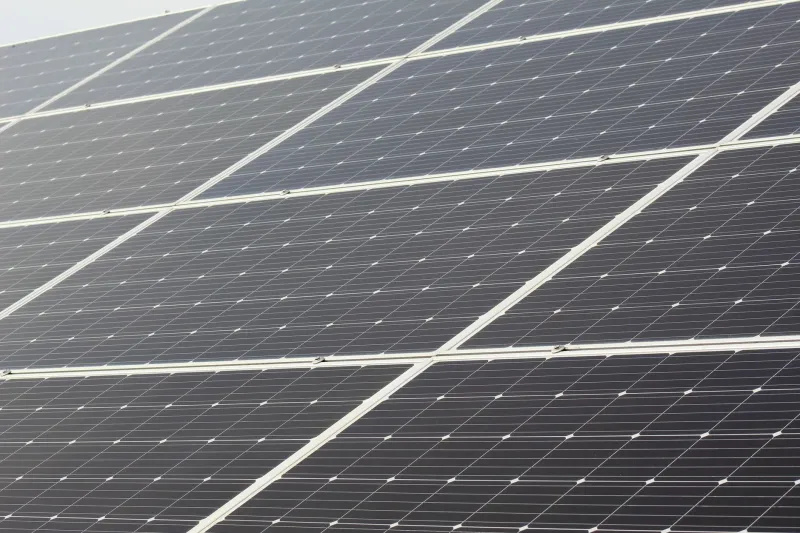
Startups like Waaree Energies and Vikram Solar have developed bifacial panel designs and mounting systems optimized for high-heat, variable-irradiance environments — conditions that happen to mirror many of the locations where US tech companies are building new solar farms to power their facilities. Several American commercial real estate and energy infrastructure firms have quietly sourced Indian solar hardware for data center campuses in the Southwest, according to industry sources.
More significantly, at least two Indian cleantech startups focused on grid-edge energy storage management software have received acquisition inquiries from US energy tech companies in the past 18 months. Neither deal has been publicly announced, but the pattern is consistent with a broader trend of American companies looking east for practical climate solutions.
The Frugal Engineering Advantage
There's a concept in Indian business culture called jugaad — roughly translated as frugal innovation, or finding elegant solutions under resource constraints. It's been somewhat over-romanticized in Western business press, but in the context of cleantech, the underlying dynamic is real.
Indian engineers developing climate technology have been doing so in an environment where energy costs are significant, grid reliability is inconsistent, and capital is scarce relative to Silicon Valley. Those constraints produce a different kind of engineering mindset — one that prioritizes efficiency, modularity, and real-world robustness over theoretical performance in ideal conditions.
"American clean energy startups often build for the demo, for the pitch deck," says Ananya Krishnamurthy, a climate tech analyst at a Mumbai-based research firm who has advised US investors on Indian market entry. "Indian startups build for the field, because the field will humble you fast if you don't. That's actually exactly what enterprise customers in the US need."
Water Tech: The Next Frontier
Data center cooling isn't just a heat problem — it's also a water problem. Traditional evaporative cooling systems at large data center campuses consume millions of gallons of water annually, a growing liability as drought conditions intensify across the American West.
This is an area where Indian innovation is particularly relevant. India has been engineering water scarcity solutions out of necessity for generations, and several startups are now applying that expertise to industrial cooling contexts. Hyderabad-based Hydrohm has developed an atmospheric water harvesting system adapted for data center environments that can reduce freshwater consumption by up to 60% in certain configurations. The company is currently in discussions with a US-based colocation provider about a pilot deployment in Arizona.
Why the Deals Stay Quiet
If all of this is happening, why don't we hear more about it? A few reasons. American tech companies are sensitive about appearing to outsource their climate credibility — acknowledging that an Indian startup solved a problem their own engineering teams couldn't is not a great look in a press release. There's also genuine IP sensitivity around some of these technologies, particularly in the cooling and materials science spaces.
But the deals are accumulating. And as the energy demands of AI continue to escalate, the urgency around practical, deployable climate solutions is only going to increase. India's cleantech sector is positioned to supply those solutions at scale — and increasingly, American tech knows it.
The irony is rich: the same Valley companies that spent years talking about changing the world are now quietly writing checks to Indian engineers who actually figured out how to do it.