Silicon From the Subcontinent: How Indian Chip Designers Are Quietly Powering America's AI Data Centers
Every time you run a query through ChatGPT, stream a recommendation from Netflix, or ask Alexa something embarrassing, a data center somewhere is burning through electricity at a rate that would make your power bill look like pocket change. The AI boom has turned data infrastructure into a full-blown crisis — too much demand, too little power, and chips that were designed for yesterday's workloads struggling to keep up with today's.
The obvious answer — more Nvidia GPUs — has a waiting list and a price tag that only the biggest hyperscalers can stomach. So where do you go when you can't get enough H100s and you can't afford the ones you can get?
Increasingly, the answer involves a phone call to Bengaluru.
The Design Powerhouse You've Never Heard Of
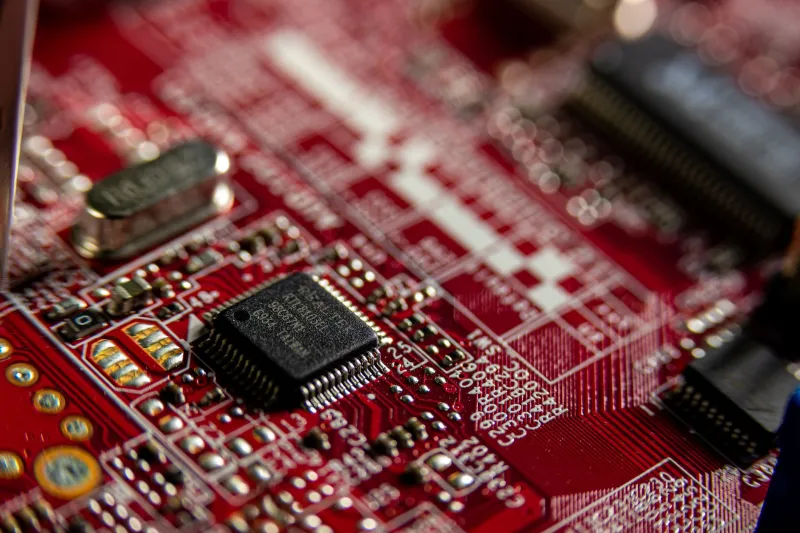
India doesn't manufacture chips at scale — yet. But it designs them, and has been doing so for decades. Companies like Intel, Qualcomm, AMD, and Texas Instruments have operated major chip design centers in India for years, quietly leveraging the country's deep pool of semiconductor engineering talent. What's changed recently is that Indian firms are no longer just doing design work for American companies — they're building their own architectures and selling them to the world.
Companies like InCore Semiconductors, Saankhya Labs, and Mindgrove Technologies are developing custom silicon that's purpose-built for specific, high-demand use cases: edge AI inference, network processing, data center interconnects. These aren't hobbyist projects. They're production-ready chip designs being evaluated — and in several cases, adopted — by hyperscalers and cloud infrastructure companies looking for alternatives to the standard x86 and GPU-heavy playbook.
Mindgrove's Secure IoT microcontroller, for instance, made headlines as one of India's first domestically designed commercial chips to reach production. But the more significant story is what's coming behind it: a pipeline of data-center-focused designs targeting the exact bottlenecks that are costing American cloud companies billions.
The Inference Problem — and India's Answer
Here's the specific technical headache that's opening the door for Indian chip designers: AI inference.
Training a large language model is expensive and happens rarely. Running that model millions of times a day — answering queries, generating content, making recommendations — is inference, and it's where the ongoing cost lives. Current GPU-based infrastructure is powerful but wildly over-engineered for inference workloads. You're using a sledgehammer to tap a nail, and you're paying sledgehammer prices for the privilege.
Custom inference chips — sometimes called AI accelerators — solve this by stripping out everything a GPU does that inference doesn't need and optimizing ruthlessly for the specific math involved in running a trained model. The efficiency gains can be dramatic: lower power draw, lower latency, lower cost per query.
This is exactly the territory Indian chip design firms are targeting. With deep expertise in RISC-V architecture (an open-source instruction set that's become a favorite for custom silicon), Indian engineers are designing inference accelerators that can slot into existing data center racks and handle AI workloads at a fraction of the energy cost of GPU-based alternatives.
RISC-V: India's Architectural Advantage
The RISC-V angle deserves a closer look, because it's central to why Indian chip designers have a real shot at this market.
RISC-V is an open-source chip instruction set — think of it as the Linux of processor architecture. Because it's not owned by any single company, designers can build on it without paying licensing fees to ARM or Intel. That dramatically lowers the barrier to entry for chip design, and India has leaned into it hard.
IIT Madras, through its SHAKTI processor program, has been developing RISC-V based processors for years and has become a genuine center of RISC-V expertise. That academic foundation has fed directly into commercial ventures. Indian startups building on RISC-V can move faster and cheaper than competitors locked into proprietary architectures, and the designs they produce are inherently more customizable — a huge advantage when different hyperscalers have different specific needs.
For American data center operators, this translates to something valuable: the ability to commission or procure chips designed specifically for their workload profile, without paying the ARM tax or waiting in Nvidia's queue.
Hyperscalers Are Already Paying Attention
None of this is purely theoretical. The hyperscaler community — AWS, Google, Microsoft Azure, Meta's infrastructure team — has been running quiet evaluations of alternative silicon for years. Google's TPUs and Amazon's Trainium and Inferentia chips proved that custom silicon for AI workloads is viable and cost-effective. The question was always: who else can do this?
Indian chip design firms are increasingly part of that answer. While specific partnership details are often under NDA (this is an industry that loves its secrecy), several Indian semiconductor companies have publicly acknowledged ongoing engagements with US cloud infrastructure players. The model is typically co-design: the Indian firm brings the architectural expertise and engineering bandwidth, the hyperscaler brings the specific workload requirements and the deployment scale.
The cost dynamics make this attractive on both sides. Indian chip design engineering talent costs significantly less than equivalent talent in Silicon Valley, without meaningful quality gaps at the senior level. For a hyperscaler trying to build a custom inference chip, that cost difference can translate into tens of millions in development savings — before a single chip is manufactured.
The Manufacturing Gap — and Why It Doesn't Matter Yet
The obvious caveat: India doesn't have advanced semiconductor fabs. The chips designed in Bengaluru are manufactured in Taiwan (TSMC) or South Korea (Samsung). That's a real dependency, and it's not going away overnight, though India's semiconductor mission is actively working to change it.
But here's the thing — for the hyperscaler adoption story, manufacturing location is largely irrelevant. What matters is who designed the chip and who owns the IP. If an Indian firm designs a custom AI accelerator and licenses that design to a US cloud company that manufactures it at TSMC, the value creation — and the strategic leverage — sits with the Indian design firm.
That's the model that's emerging, and it's one where India's existing strengths play extremely well.
What's Coming Next
The next 24 months are likely to see several Indian chip design firms move from quiet evaluation stage to publicly announced partnerships with major US infrastructure players. The pressure on data center economics from AI workloads isn't easing — it's intensifying — and the appetite for alternatives to the Nvidia-dominated status quo is real and growing.
For American businesses and IT decision-makers, the practical implication is that the silicon powering your cloud infrastructure is increasingly being designed somewhere other than California. And if the early results from Indian chip design firms are any indication, that's probably a good thing for your AWS bill.