Silicon Dreams, Desi Roots: The Indian Chip Startups Quietly Powering America's Tech Stack
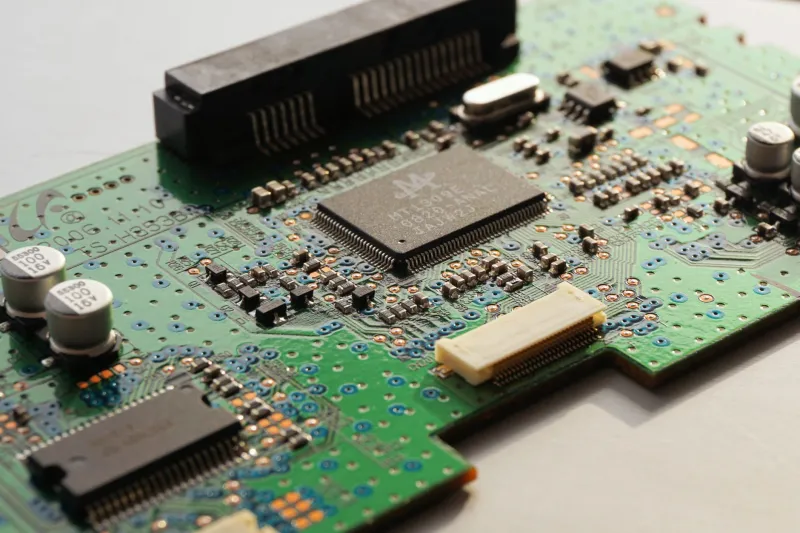
When most Americans think about where their chips come from, the usual suspects pop up — Taiwan, South Korea, maybe a fab somewhere in Arizona if you've been following the CHIPS Act drama. India rarely enters that conversation. But spend a few weeks talking to engineers and investors in Bengaluru's semiconductor corridor, and a very different picture starts to emerge.
A scrappy, fast-moving cohort of Indian chip design startups is quietly embedding itself into the global silicon supply chain — not by building fabs, but by doing something arguably harder: designing the actual brains inside next-generation devices. And they're doing it at a pace and price point that's starting to make legacy players genuinely nervous.
The Design-First Playbook
Here's the thing about chip manufacturing versus chip design — they're very different businesses. Fabrication requires billions in capital expenditure, specialized equipment, and years of process refinement. Design, on the other hand, is fundamentally an intellectual exercise. It rewards deep engineering talent, creative problem-solving, and an ability to understand what a customer actually needs at the silicon level.
That's exactly where India's advantage lives.
Companies like Mindgrove Technologies, InCore Semiconductors, and Saankhya Labs aren't trying to out-TSMC TSMC. Instead, they're going after the fragmented, high-value niche markets that larger players either can't serve efficiently or frankly don't bother with — custom AI inference chips for edge devices, specialized processors for automotive ADAS systems, and domain-specific accelerators for telecom infrastructure.
Mindgrove, a Chennai-based startup founded by IIT graduates, made waves when it taped out India's first commercial-grade microcontroller on a domestic design flow. That's not just a symbolic milestone — it's proof that the talent and toolchain depth exist to compete globally.
Why US Companies Are Coming to the Table
Let's talk numbers for a second, because this is where the story gets interesting for American tech buyers.
A senior chip design engineer in Silicon Valley commands anywhere from $180,000 to $280,000 in total compensation annually. The equivalent talent profile in Bengaluru or Hyderabad? You're looking at roughly $25,000 to $45,000 — and these aren't junior engineers. India produces over 1.5 million engineering graduates each year, with a substantial chunk specializing in VLSI design, embedded systems, and RTL development.
For US startups trying to develop custom silicon without the runway of an Nvidia or Qualcomm, that cost delta is the difference between shipping a product and running out of money in the design phase.
Several Silicon Valley AI startups — most of whom declined to be named due to competitive sensitivity — have quietly offshored significant portions of their chip verification and physical design work to Indian firms. The arrangement isn't just about cost savings; it's about access to specialized skills that are genuinely scarce in the US market right now.
AI Accelerators: India's Breakout Moment
If there's one segment where Indian semiconductor startups are making the most aggressive moves, it's AI accelerator design. The global race to build efficient inference chips — the kind that run trained AI models on devices rather than in data centers — has created an opening that several Indian companies are sprinting through.
Tatras Data, a Bengaluru-based fabless startup, has been developing neural processing units (NPUs) specifically optimized for on-device generative AI workloads. Their approach focuses on power efficiency over raw throughput, which makes their designs particularly attractive for edge deployments in healthcare monitoring devices and industrial IoT systems — markets where battery life and thermal constraints matter enormously.
Meanwhile, Fasal, while primarily known as an agri-tech company, has been developing proprietary silicon for its sensor networks — a sign that the custom chip trend is spreading beyond pure-play semiconductor firms into application-layer companies that realize off-the-shelf chips can't meet their specific requirements.
The Regulatory and Ecosystem Tailwind
India's government has been pouring fuel on this fire. The India Semiconductor Mission, backed by a $10 billion incentive package, has been specifically designed to attract both fab investments and design ecosystem development. While most of the headline attention has gone to Micron's assembly and test facility in Sanand, the quieter but arguably more impactful investment is in design-linked incentive schemes that directly support startups.
The establishment of Chips to Startup (C2S) program under the Ministry of Electronics has created a pipeline of university-trained VLSI engineers who are job-market-ready in ways that would have been unimaginable a decade ago. Several of the startups in this space trace their founding teams directly back to IIT chip design labs that received C2S funding.
What This Means for the US Chip Ecosystem
Here's the honest take: Indian semiconductor startups aren't coming for Nvidia's lunch. Not yet, anyway. The gap in manufacturing infrastructure, EDA tool maturity, and IP portfolio depth is real. But in the specific domain of custom silicon design services and niche accelerator development, the competitive threat to established US design houses is genuinely material.
For American tech companies — especially the mid-tier startups building AI-powered products who can't afford to pay Qualcomm's licensing fees or ARM's royalty structures — Indian chip design firms represent something genuinely valuable: a credible alternative path to custom silicon that doesn't require a Series D just to cover the NRE costs.
The chip design revolution isn't happening only in San Jose or Austin. Some of its most interesting chapters are being written in Bengaluru, Chennai, and Hyderabad — by engineers who grew up reading about Intel's glory days and decided they'd rather build the next chapter themselves.
TechLeez will be watching this space very closely. The leaderboard for global chip design is shifting, and India just moved up a few spots.