India's 5G Engineers Are Writing the Rules Everyone Else Has to Follow
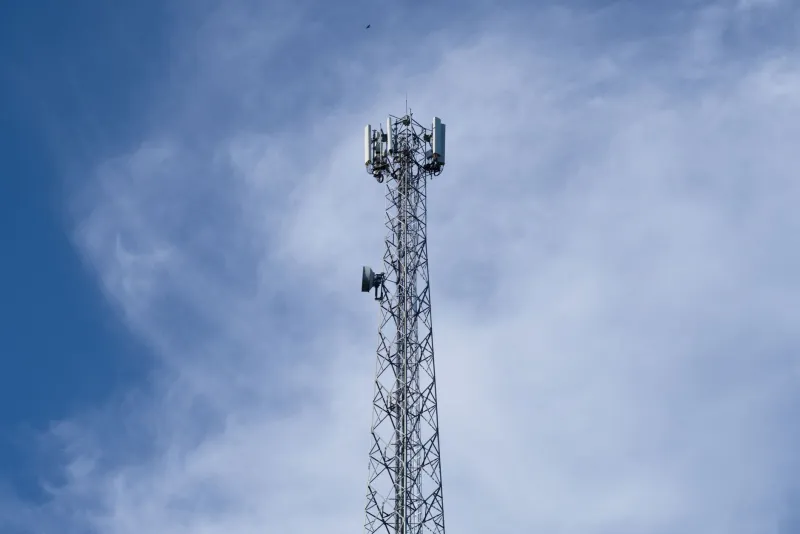
There's a version of the 5G story that most American tech coverage tells. Huawei versus Ericsson. C-band spectrum auctions. T-Mobile's mid-band rollout. Millimeter wave hype cycles. It's a story told almost entirely within the borders of a handful of wealthy, densely connected countries.
That version of the story is incomplete in ways that are going to matter a lot over the next decade.
The more complete version includes India—a country that has not only executed one of the fastest 5G rollouts in history but is simultaneously contributing novel technical solutions to the global standards bodies that determine how 5G evolves and how 6G gets designed. Indian telecom engineers are not passive recipients of technology developed elsewhere. They're active co-authors of the standards documents, patents, and architectural decisions that the entire global industry has to reckon with.
For US telecom companies, equipment vendors, and enterprise tech buyers, understanding what's coming out of India's telecom innovation engine is increasingly not optional.
The Rollout That Rewrote the Playbook
When India's two dominant carriers—Reliance Jio and Bharti Airtel—began their 5G deployments in late 2022, the scale was almost incomprehensible. India has 22 distinct telecom circles, covering terrain that ranges from the dense urban canyons of Mumbai to the high-altitude Himalayas to the remote agricultural expanses of Rajasthan and Bihar. Connecting all of it, at speed, under serious cost constraints, required engineering solutions that simply didn't exist off the shelf.
Jio's approach was particularly striking. The company had already built its 4G network on a fully IP-based architecture when most carriers globally were still running legacy hybrid infrastructure. For 5G, Jio went standalone architecture from day one—deploying a 5G core that doesn't rely on 4G infrastructure as a crutch. That's a technically superior approach that many US carriers have been slower to adopt, partly due to the complexity of migrating legacy systems.
The engineering decisions Jio made at scale—about network slicing, about how to handle massive device density in urban markets, about spectrum management across wildly different geographic contexts—are being studied by network architects globally. When you've successfully managed 5G connectivity for a city of 20 million people and a village of 2,000 on the same network backbone, you've generated operational knowledge that's genuinely rare.
Standards Bodies and the Influence Game
Here's the part of the story that most tech coverage misses entirely: the standards bodies.
3GPP—the 3rd Generation Partnership Project—is the international consortium that develops the technical specifications for mobile networks. What gets written into 3GPP specifications becomes, effectively, the law of the telecom land. Every carrier, every equipment vendor, every chipmaker has to build to these specs.
Indian engineers and companies have been dramatically increasing their presence and influence within 3GPP over the past several years. Contributions from Indian engineers—working at Jio, Airtel, Samsung India R&D, Qualcomm India, and a growing number of domestic telecom tech startups—have been showing up in 3GPP working groups at a rate that reflects genuine technical authority, not just seat-filling.
The areas where Indian contributions are particularly notable include low-latency architectures for industrial IoT applications, coverage optimization techniques for sparse rural networks, and energy efficiency specifications that matter enormously for a country trying to balance network expansion with sustainability commitments.
This matters for US companies because 3GPP specifications don't care about national origin. If Indian engineers write a better solution into a standard, US equipment vendors and carriers have to implement it. The influence game in standards bodies is one of the most important and least-discussed dimensions of technology competition.
The Rural Connectivity Problem as Innovation Engine
One of the counterintuitive dynamics in Indian telecom innovation is how constraint has functioned as a creative force. Connecting rural India—hundreds of millions of people across geographically challenging, economically diverse terrain—is a problem that has no clean solution in the existing telecom engineering playbook.
The solutions being developed to address this challenge are technically sophisticated in ways that have broad applicability. Dynamic spectrum sharing techniques that allow 5G and 4G to coexist efficiently on the same spectrum bands were refined in India partly because the economics of dedicated 5G spectrum in low-density areas don't work. Fixed wireless access architectures that use 5G as a broadband delivery mechanism for homes and businesses—rather than relying on fiber last-mile—have been deployed at scale in India in ways that are directly relevant to US rural broadband challenges.
For American communities still waiting for reliable broadband, the engineering solutions being field-tested across rural India are not some exotic foreign experiment. They're potential templates for solving a problem that has frustrated US policymakers for decades.
Edge Computing: Where India's Telecom Vision Gets Ambitious
The 5G conversation is increasingly inseparable from the edge computing conversation. The killer applications for 5G—autonomous vehicles, industrial automation, real-time augmented reality, remote surgery—all require compute resources to live close to the network edge rather than in distant data centers. Latency is physics; you can't negotiate with the speed of light.
Indian telecom companies are building edge computing architectures with a particular focus on multi-tenant edge infrastructure—platforms where multiple enterprise customers share edge compute resources deployed at cell tower sites or regional data centers. This model makes economic sense in markets where the per-customer economics of dedicated edge infrastructure don't pencil out.
Tata Communications, which operates one of the world's largest private subsea cable networks alongside its terrestrial infrastructure, has been particularly active in developing edge computing platforms that leverage its existing network geography. For global enterprises—including many US companies with significant India operations—Tata's edge infrastructure is already a real option, not a future promise.
6G Is Already Being Discussed in Delhi
International Telecommunication Union discussions about 6G—the technology that will likely begin commercial deployment somewhere around 2030—are already underway, and Indian government and industry representatives are at the table with prepared positions.
India's Department of Telecommunications has published a 6G vision document that stakes out specific technical priorities: terahertz spectrum utilization, AI-native network architectures, and what the document calls "ubiquitous intelligent connectivity"—a vision of networks that adapt dynamically to usage patterns rather than requiring manual configuration.
Whether India's 6G vision ultimately shapes the standard or gets absorbed into a broader international consensus, the act of publishing a detailed technical position document is itself significant. It signals that India intends to be a rule-maker in the next generation of wireless technology, not just a rule-follower.
What US Companies Need to Do Differently
The practical implication for US telecom companies, enterprise tech buyers, and investors is straightforward: India's telecom innovation ecosystem deserves a seat at the strategic planning table, not just the vendor evaluation table.
That means paying attention to what Indian engineers are publishing in standards bodies. It means evaluating Indian telecom technology companies—Tejas Networks, VVDN Technologies, Saankhya Labs—as potential partners and investment targets rather than afterthoughts. It means recognizing that the solutions being battle-tested on India's network infrastructure are often more relevant to real-world deployment challenges than anything developed in a lab.
The rules governing how the world's networks will operate over the next two decades are being written right now. And a significant number of the people writing them are working in India.